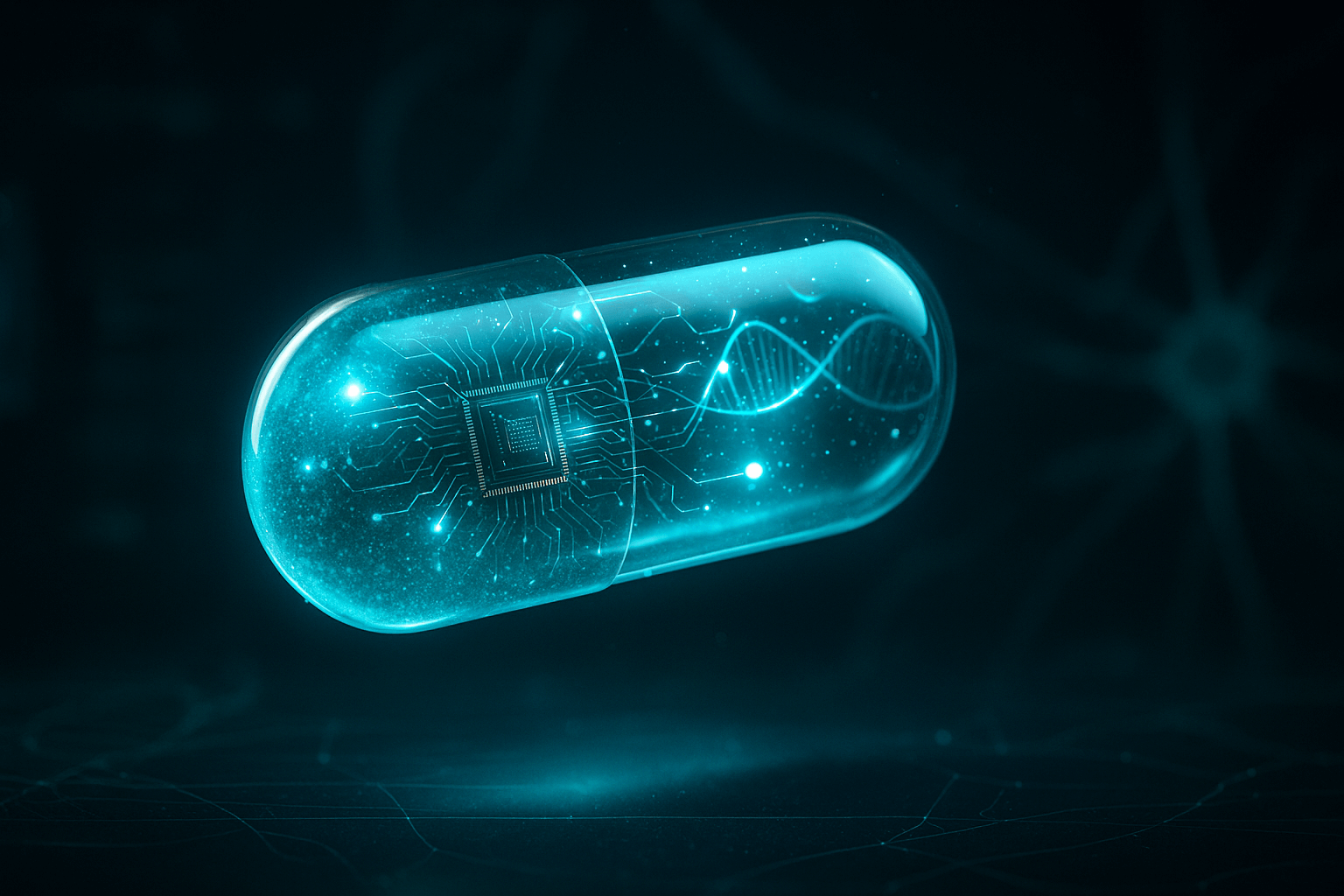
The probe traces a tiny signal traveling through the human interior: a swallowed capsule awakens, scans its surroundings, and begins making decisions. What happens when medicine gains its own intelligence—observing, adapting, and healing from deep inside the body?
Scanning deeper: smart pills represent a new era where drugs don’t merely dissolve—they monitor conditions in real time and release precise doses exactly when and where needed.
How a Smart Pill Works
Inside a standard-sized capsule (00), engineers integrate:
- Multisensor array: pH, temperature, pressure, biomarker-specific aptamers;
- 32-bit microprocessor: runs embedded AI models (TensorFlow Lite);
- Micro-reservoir system: 4–6 independent drug chambers with MEMS valves;
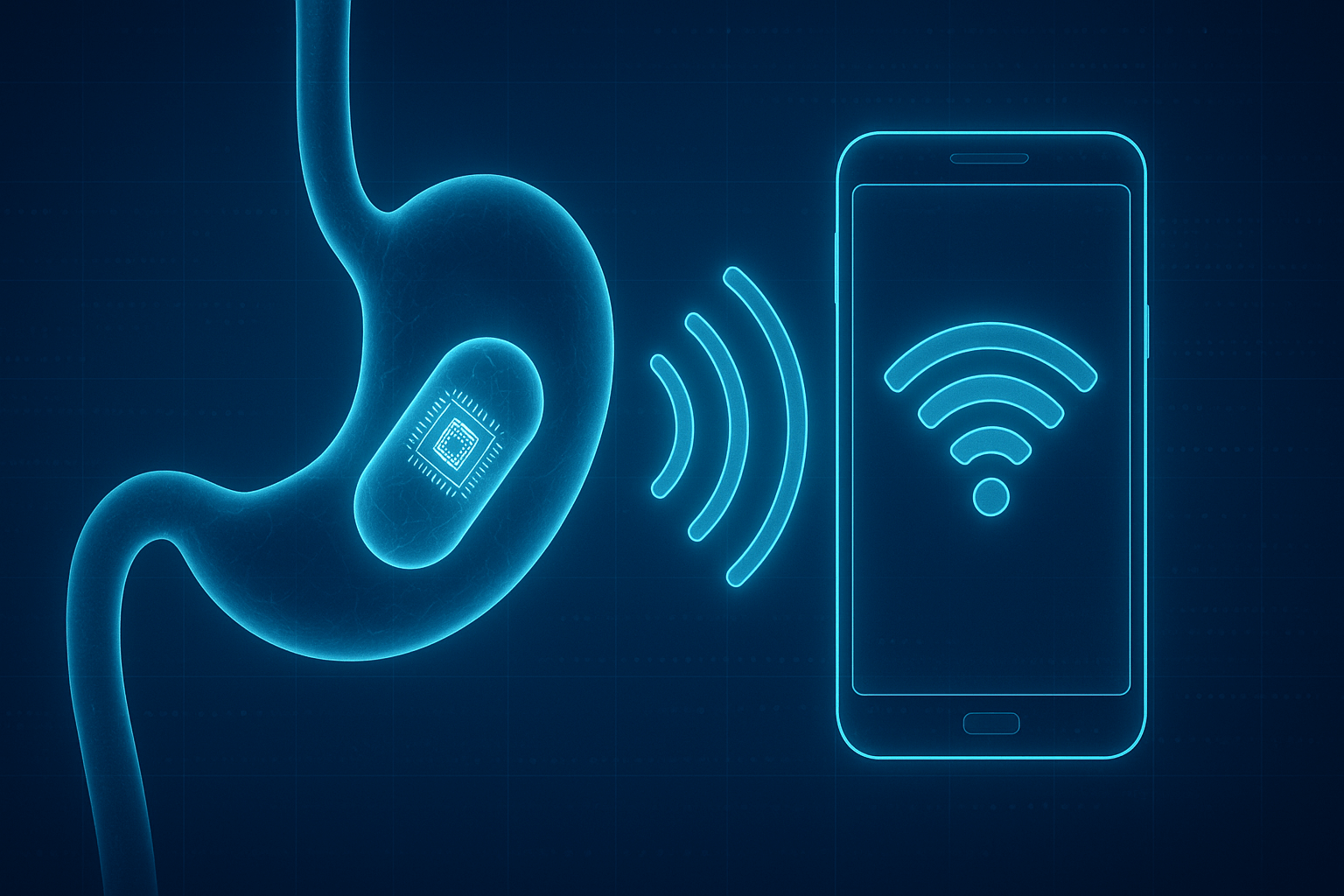
- Bluetooth Low Energy + NFC: communicates with a skin patch or smartphone;
- Edible battery: activated by stomach acid, lasts 48 hours.
After ingestion, the pill navigates the GI tract like food. Every 30 seconds, it samples the environment. When conditions match programmed criteria (e.g., “pH < 2.0 + IL-6 > 50 pg/mL”), it opens a valve and delivers a micro-dose—precisely on target.
Example: the Proteus Digital Health Pill
The first FDA-approved digital medicine: Abilify MyCite (2017).
- Contains aripiprazole + 1mm² ingestible sensor;
- Sensor activates in stomach acid → sends signal to wearable patch;
- Patch → app → doctor: 100% compliance tracking;
- Result: 74% reduction in missed doses in schizophrenia patients.
By 2025: second-generation pills no longer just report—they actively adjust therapy.
Pills with Artificial Intelligence
AI serves as the brain of the pill:
- Onboard ML model: Trained on 10,000+ patient datasets;
- Real-time adaptation: If inflammation spikes, it increases anti-TNF release by 20%;
- Closed-loop therapy: Measures response 10 minutes post-dose, adjusts next cycle.
In a 2024 Johns Hopkins trial:
- AI pill for Crohn’s disease reduced flare-ups by 68% vs. standard therapy;
- Patients required 40% less total drug — fewer side effects.
Breakthrough: Pills That Hunt Tumors
MIT’s CancerSeeker Capsule (2025 prototype):
- Contains DNA aptamers that bind to circulating tumor DNA (ctDNA);
- Detects colorectal cancer biomarkers at Stage I — 94% accuracy;
- Bluetooth alert within 3 hours of ingestion;
- No colonoscopy needed for screening.
Challenges and Risks
- Biocompatibility: Must fully dissolve in <72 hours — no residue;
- Data security: 256-bit encryption + blockchain logging for health data;
- AI ethics: Who programs the decision rules? What if the pill “decides” wrong?
A 2025 FDA guideline now requires human override for all AI dosing decisions.
What’s Next
- 2026: Smart insulin pills — auto-dose for Type 1 diabetes;
- 2027: Neural-linked pills — transmit data to brain implants;
- 2030: Swallowable pharmacies — one pill, 30-day treatment for hypertension, cholesterol, and mental health.
Key signal: the future of medicine is migrating inside us—microscopic devices that heal while we simply live.
The probe follows the capsule’s journey and fades into shadow: treatment has become intelligent, autonomous, and intimately personal.