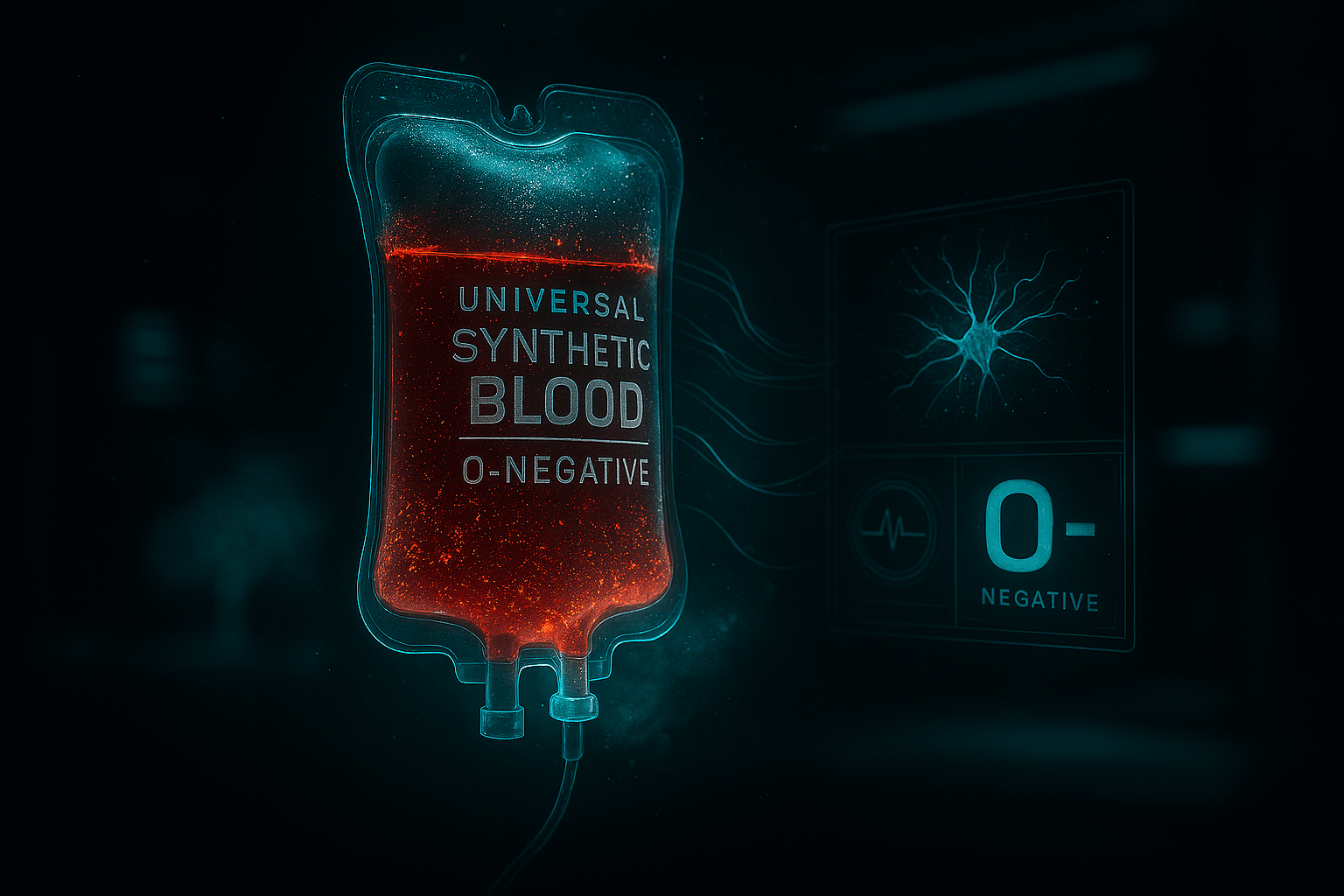
The probe detects a vital signal in the chaos of trauma: a single red pouch pulled from a medic’s kit—no typing, no matching, no delay. What happens when blood becomes universal, turning every critical minute into a guaranteed chance at survival?
Scanning deeper: engineered oxygen carriers are emerging as true synthetic blood, compatible with any recipient and poised to end shortages in emergencies worldwide.
Why This Is a Problem at All
Every minute, lives are lost because the correct blood type isn’t available. Eight major groups (A, B, AB, O) and Rh factors create deadly mismatches—triggering hemolytic crises where red cells burst, kidneys fail, and death follows rapidly.
In remote areas, war zones, or mass casualties, blood banks are nonexistent. Shock sets in within 30 minutes.
What Artificial Blood Actually Is
It’s not imitation—it’s engineered oxygen carriers performing the core role of red blood cells:
- Hemoglobin-based: Pure human hemoglobin extracted and purified;
- Encapsulated in lipid-polymer shells: Mimics cell membrane, prevents immune attack;
- Size: ~150 nm: Small enough to flow through capillaries, large enough to avoid kidney filtration.
Think of them as nano-red-blood-cells—smarter, safer, and truly universal.
Real Experiments — Real Lives Saved
-
🇯🇵 Artificial O₂ (Hemoglobin Vesicles) — National Defense Medical College
2024 animal trials: 100% survival in hemorrhagic shock (vs. 0% untreated). Works across species — dog, pig, monkey. Human Phase I starts 2026. -
🇺🇸 ErythroMer (University of Maryland)
Powdered blood — freeze-dried, shelf-stable for 3+ years at room temp. Reconstitute with saline in 30 seconds. 2025: FDA fast-track for trauma use. -
🇬🇧 HemoPure (HbO2 Therapeutics)
Bovine hemoglobin-based, already used in South Africa for Jehovah’s Witnesses (no human blood). Zero transfusion reactions in 1,000+ patients.
“One bag can save anyone, anywhere — no typing, no waiting, no waste.” — Dr. Hiromi Sakai, lead researcher, Artificial O₂ project
Advantages Over Real Blood
- Universal compatibility — no ABO, no Rh issues;
- Stores at room temperature for years — no refrigeration;
- Sterile by design — zero risk of HIV, hepatitis, prions;
- Scalable — produced in bioreactors, not donated;
- Customizable — add clotting factors, antibiotics, or cancer drugs.
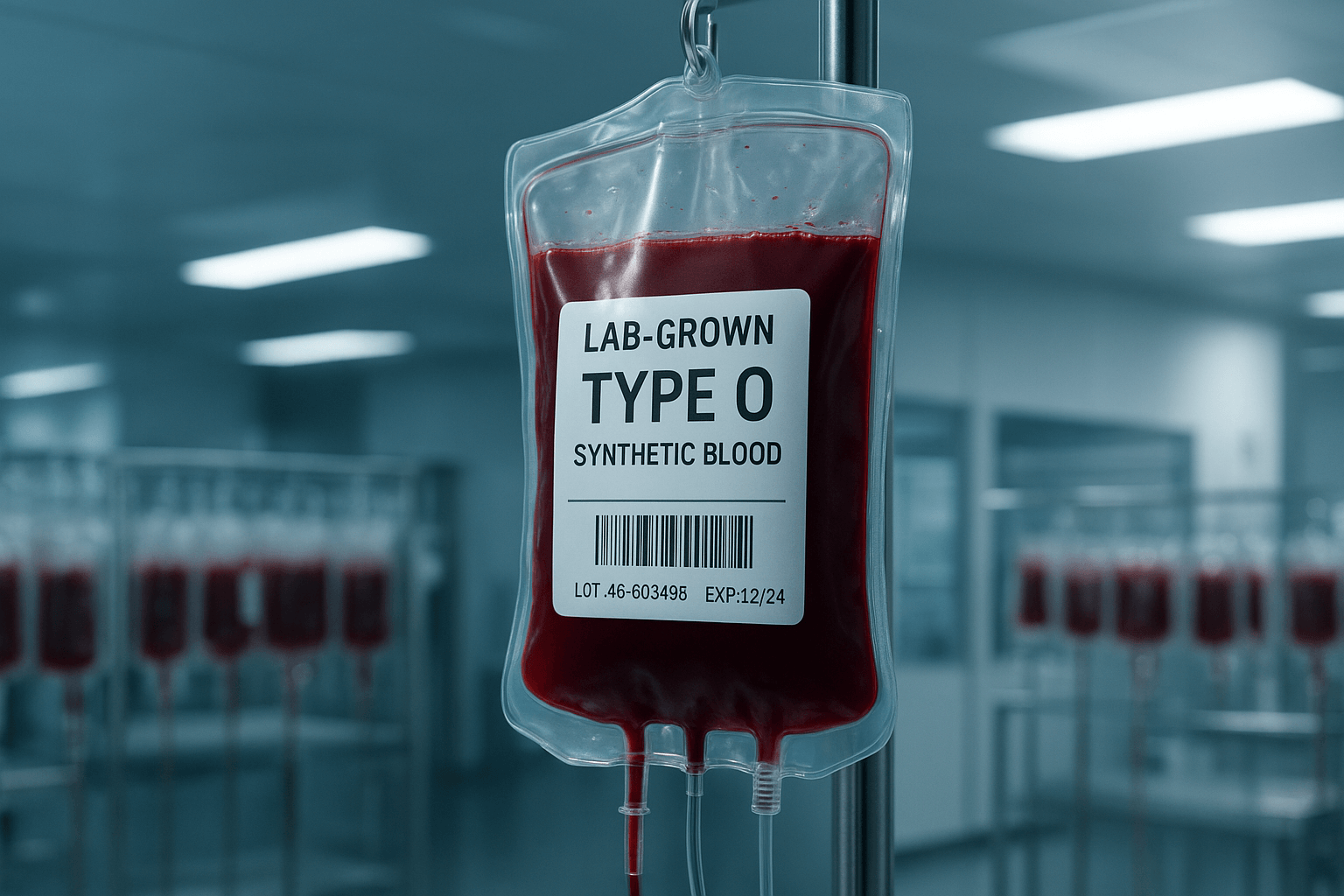
But There Are Risks — Because It’s Not Magic
- Short half-life: 12–24 hours (vs. 120 days for real RBCs) — bridge, not replacement;
- Methemoglobin formation: Can reduce oxygen delivery if >5% — solved with antioxidants;
- Vasoconstriction: Early versions caused blood pressure spikes — fixed with nitric oxide coatings.
Current verdict: safe for emergency use. Full replacement? Not yet — but advancing rapidly.
What’s Next
- 2026: First human trauma trials (Japan, U.S. military);
- 2028: Standard issue in ambulances and combat medics;
- 2030: Portable blood pods — every police car, school, home;
- 2035: Self-replicating blood — engineered stem cells that grow inside the body.
Key signal: blood shortages are on the verge of becoming history—every life now has immediate access to a universal lifeline.
“We are creating a reserve of life — for moments when every second counts.” — Dr. Allan Doctor, ErythroMer Project, Washington University
The probe withdraws from the vital flow and fades into shadow: the essence of life is becoming limitless and universally shared.