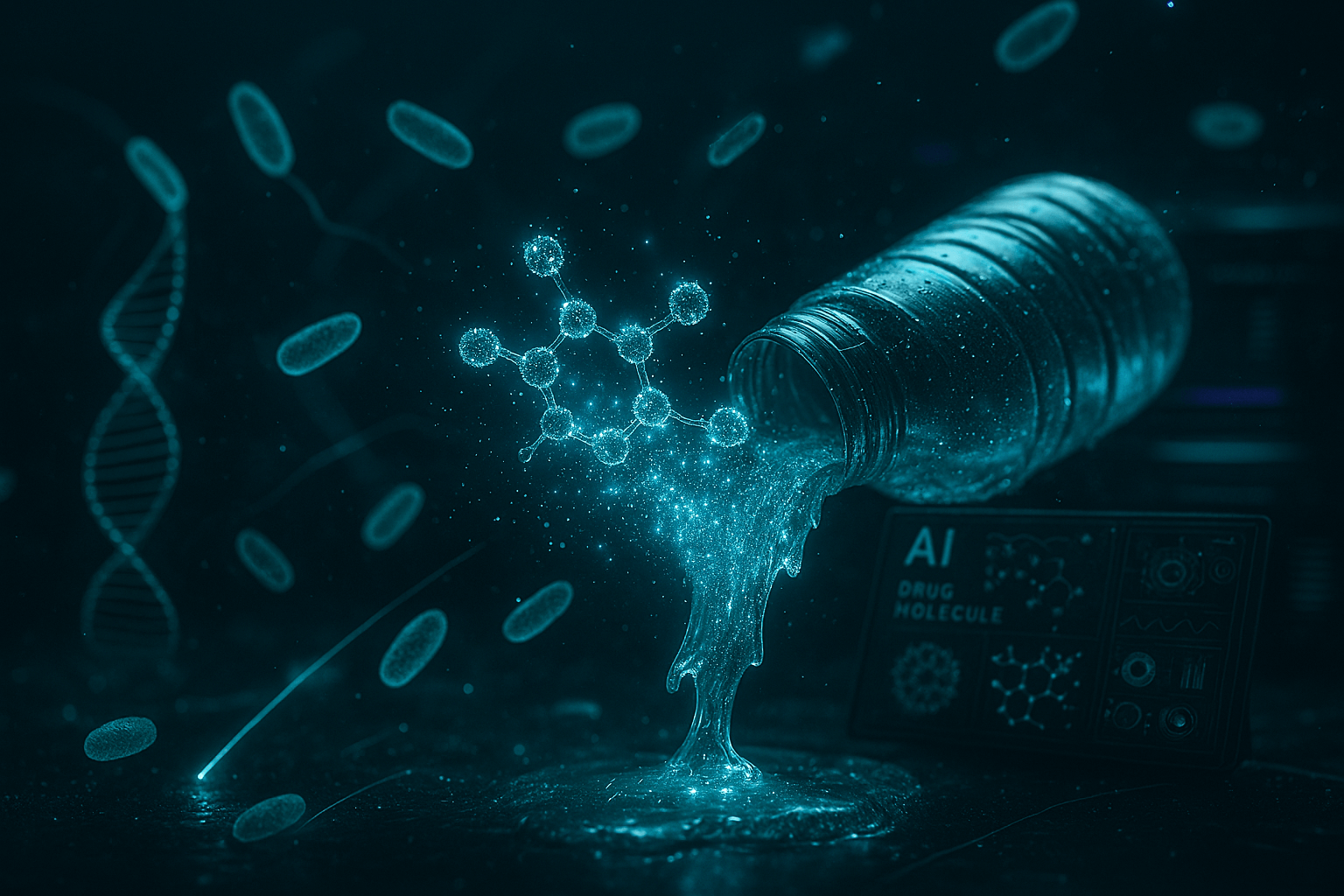
The probe captures a faint, persistent signal emerging from the world’s waste heaps: tiny organisms quietly consuming humanity’s most enduring mistake. Imagine oceans free of floating islands of plastic, beaches without buried bottles—waste that vanishes in weeks, not millennia.
Scanning deeper: a biological revolution is accelerating. Naturally evolved bacteria and AI-enhanced enzymes are dismantling indestructible polymers, converting decades of accumulated pollution back into usable raw materials—and potentially closing the circle on one of our greatest environmental failures.
♻️ How the “Plastic-Eating” Bacteria Was Discovered
It started in 2016 near a PET bottle recycling facility in Sakai, Japan. Researchers sampling contaminated soil discovered a microorganism that had adapted to survive solely by feeding on plastic.
It was named Ideonella sakaiensis. It secretes an enzyme called PETase that systematically breaks down polyethylene terephthalate (the material in most bottles and packaging) into basic compounds the bacterium then metabolizes as energy.
Key signal: processes that take nature centuries to achieve, this microbe completes in days under optimal conditions. In laboratory tests, a thin PET film fully dissolved in just six weeks—outperforming every previous chemical catalyst.
🧠 AI Accelerated Evolution
Researchers enlisted artificial intelligence to refine the natural enzyme. Machine-learning algorithms studied PETase’s molecular structure and proposed precise mutations to boost speed and thermal stability.
In 2022, a University of Texas team unveiled FAST-PETase—a variant that degrades plastic in 24 hours at 50°C, a temperature that would deactivate most natural enzymes.
Pilot experiments showed 90% of PET bottles reduced to reusable monomers in under 48 hours—meaning an entire ton of waste could theoretically disappear in a single day.
🌊 Oceans, Landfills, and Laboratories
Deployment is moving beyond labs. French company Carbios now operates the world’s first industrial enzymatic recycling plant, processing 250 kg of plastic daily using optimized PETase.
The cycle is straightforward:
- collect plastic,
- shred it,
- add the enzyme,
- and recover pristine monomers to manufacture new plastic.
This creates a true closed loop with a 60% smaller carbon footprint than virgin production.
🔬 Other “Waste-Eating” Organisms
- 🦠 Pseudomonas putida — transforms plastic into biofuel; recent demonstrations produced 1 liter of biokerosene from 3 kg of waste;
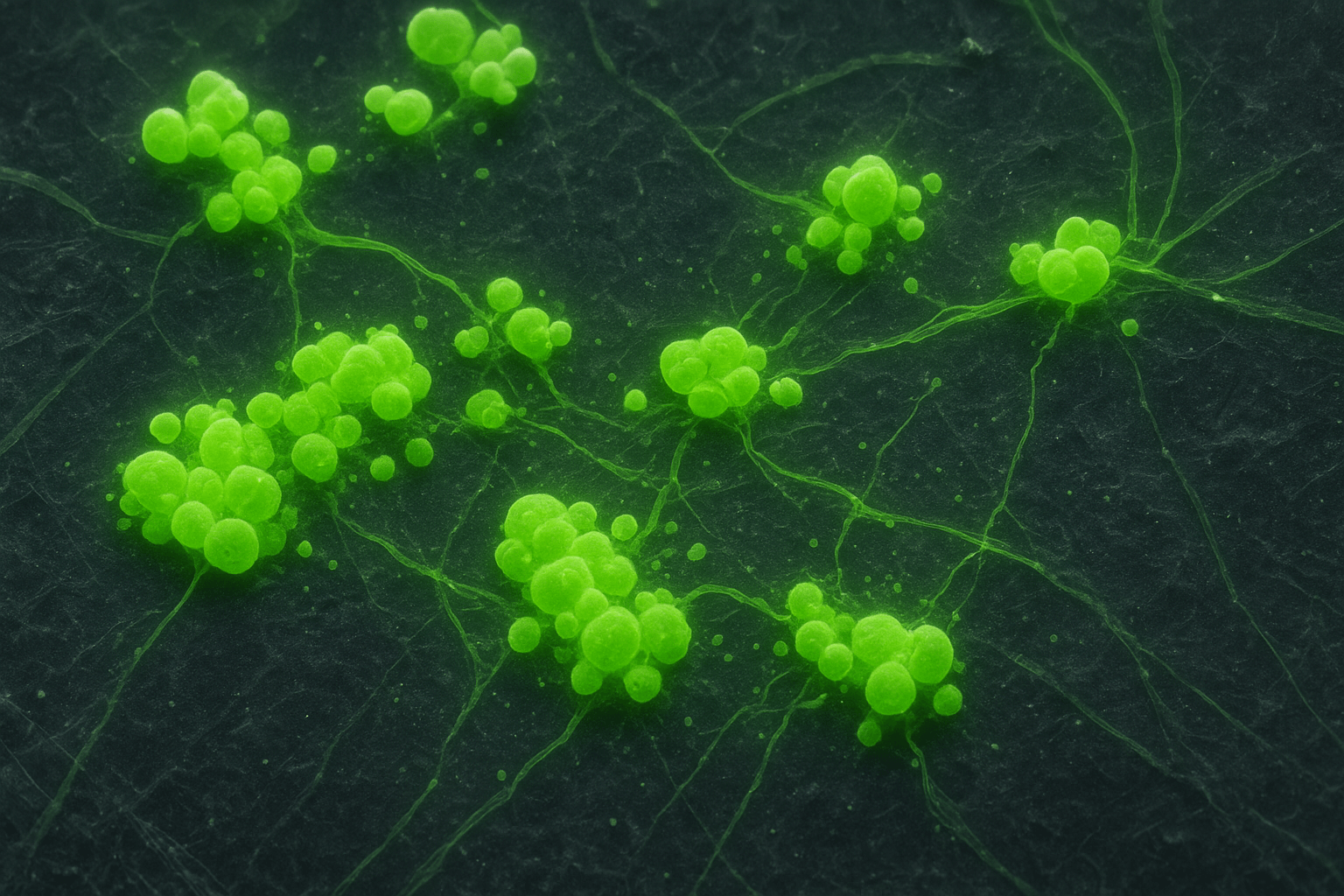
- 🍄 Plastic-degrading fungi (Aspergillus tubingensis) — isolated from a Pakistani landfill, degrade polyurethane in two months by growing directly on the material;
- 🌿 Modified E. coli strains convert PET waste into vanillin — the compound responsible for vanilla aroma — opening unexpected new product pathways.
⚠️ Why It’s Not Used Everywhere Yet
Open-environment release carries risks. Ecosystems are complex, and uncontrolled microbes could disrupt natural balances. Current applications rely on contained bioreactors with strict monitoring protocols.
“We can’t just release bacteria into the ocean and hope they’ll eat everything. We need closed systems where every microbe is accounted for.” — Dr. Kohei Oda, lead researcher of the Ideonella sakaiensis project
Today’s enzymes primarily target PET. Polyethylene and polypropylene remain resistant—but next-generation AI-trained variants are projected to handle LDPE by 2026.
💡 What’s Next
- The first full-scale enzymatic recycling facility opens in Lyon in 2025;
- Ongoing global surveys of extreme environments continue to uncover new microbial candidates, with a dozen promising strains already identified;
- Early consumer products appear—prototypes like enzyme-embedded sneakers that safely decompose in compost within 72 hours.
Key signal: tomorrow’s landfills may function as biofactories—sites where waste is no longer buried, but actively reborn as resources.
The probe finishes its survey and slips into shadow: microscopic life is quietly undoing one of humanity’s largest ecological errors.